Heating Ductwork Inspection & Airflow Balancing
Even the most advanced, high-efficiency furnace cannot heat your home properly if the ductwork delivery system is leaky, disconnected, or poorly balanced. Studies by the Department of Energy demonstrate that typical residential duct systems lose 20% to 30% of conditioned air through unsealed joints, holes, and poorly connected plenums in attics, crawlspaces, and basements.
Warning Signs & Common Symptoms
Recognizing early symptoms prevents mid-winter heating shutdowns and prevents further component damage:
- !Certain upstairs bedrooms or distant corner rooms remain freezing cold while other rooms are stifling hot
- !Whistling or rattling air noises from registers when the furnace blower runs
- !Excessive dust accumulating on furniture despite frequent air filter replacements
- !Furnace frequently trips its high-limit switch due to high external static pressure
Professional Service & Diagnostic Procedure
Qualified heating technicians utilize structured diagnostic sequences rather than guessing or replacing parts arbitrarily:
External Static Pressure (ESP) Test
Drill test ports in supply and return plenums to measure total static pressure against furnace design ratings (typically 0.5 in. w.c.).
Thermal Imaging Leak Inspection
Scan accessible duct runs with infrared thermal cameras while heating operates to spot heated air escaping into unconditioned spaces.
Airflow Anemometer Balancing
Measure CFM delivery at each supply register using a calibrated anemometer or capture hood; adjust dampers for balanced room temperatures.
Mastic Sealing Recommendations
Seal joints, elbows, and boots with fiberglass mesh and mastic paste to eliminate thermal losses.
What You Can Safely Check
- •Walk through every room and ensure supply registers and large return air grilles are completely unblocked by rugs, drapes, or furniture
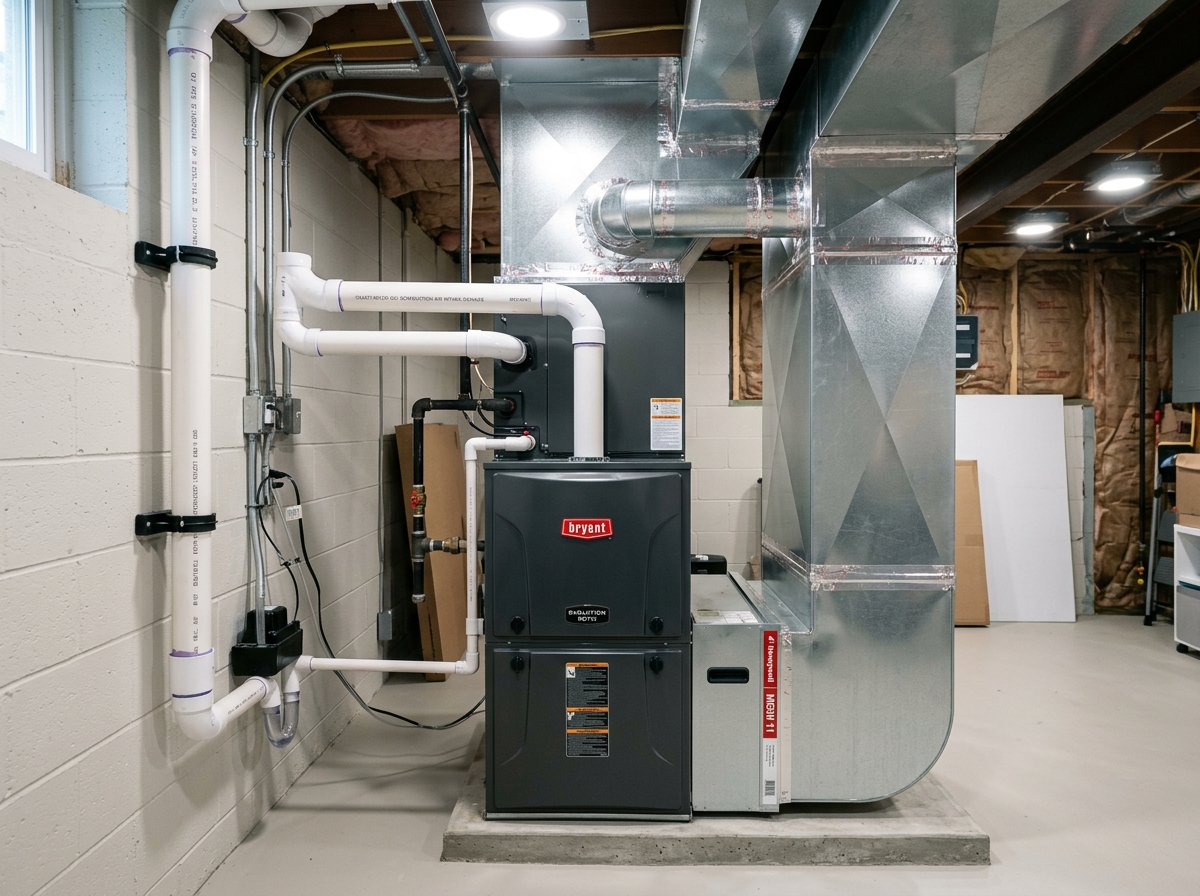
- •Inspect accessible ductwork in unfinished basements for disconnected sections or uninsulated sheet metal runs
- •Avoid closing more than 10% of your home's supply registers; doing so creates excessive backpressure that damages furnace heat exchangers
Requires Qualified Professional
- ⚠Standard cloth-backed "duct tape" degrades and falls off within 1 to 2 years; always use code-approved foil-faced mastic tape or liquid mastic sealant
- ⚠Never run return air ducts through unsealed crawlspaces containing high radon or moisture levels
Frequently Asked Questions About Ductwork Inspection & Airflow Balancing
Ductwork Inspection & Airflow Balancing Available by State
Our local heating specialists serve all 50 states and metropolitan regions:
Inquire About Ductwork Inspection & Airflow Balancing
Call our customer service team to describe symptoms, request diagnostics, or schedule service.