Residential Furnace Installation Services
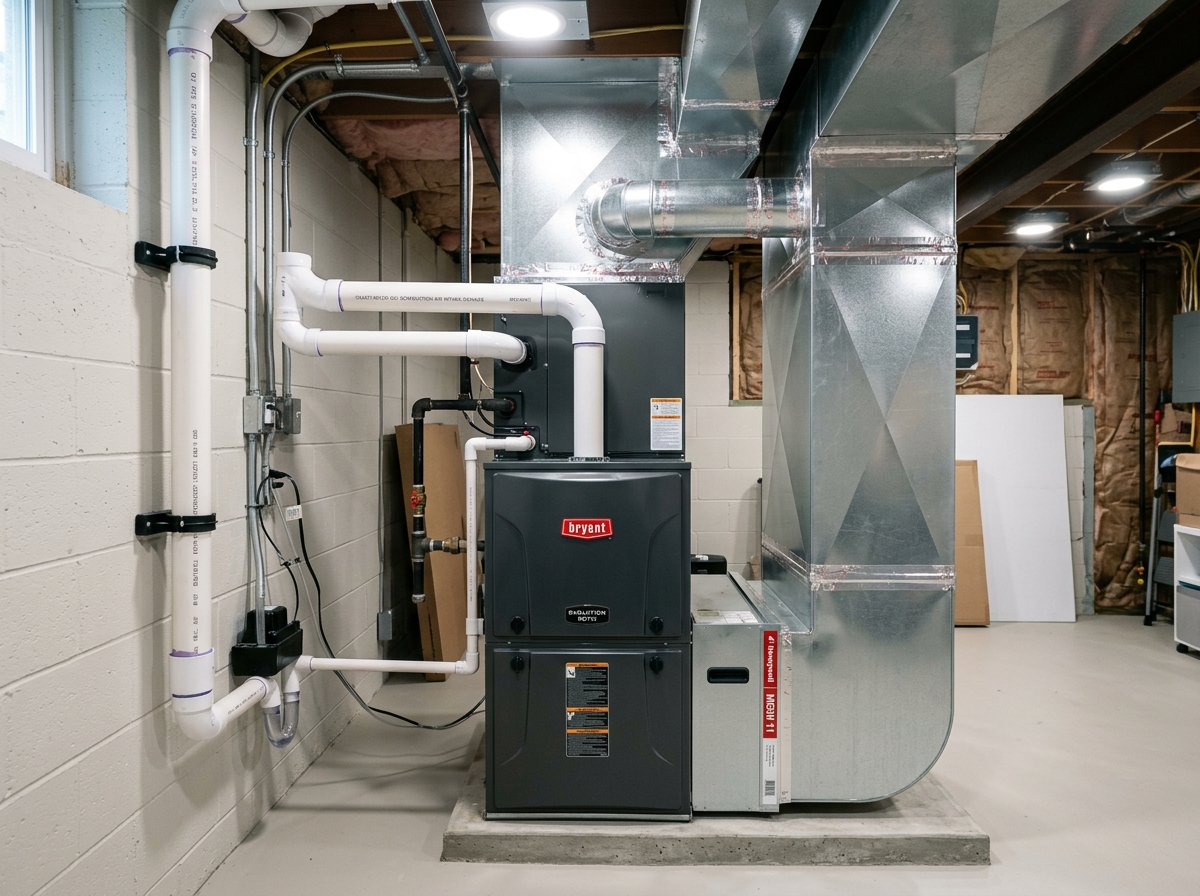
Proper furnace installation requires precise thermal load calculations rather than simply swapping identical BTU equipment. An oversized furnace short-cycles, creating uncomfortable temperature swings and elevated humidity, while an undersized unit runs nonstop in freezing weather. Modern installations emphasize matched duct transitions, dedicated combustion air intake, two-stage or modulating gas valves, and variable-speed ECM blower motors.
Warning Signs & Common Symptoms
Recognizing early symptoms prevents mid-winter heating shutdowns and prevents further component damage:
- !Current unit requires frequent repairs exceeding 50% of the replacement cost
- !Significant cold spots across rooms due to inadequate static duct delivery
- !Rising heating fuel bills despite normal winter temperatures
- !Excessive furnace operation noise disturbing family members
Professional Service & Diagnostic Procedure
Qualified heating technicians utilize structured diagnostic sequences rather than guessing or replacing parts arbitrarily:
Manual J Heating Load Calculation
Calculate exact residential thermal loss considering insulation values, window types, and regional design temperatures.
Ductwork & Static Pressure Sizing
Inspect supply and return plenums to verify adequate external static pressure (ESP) for optimal airflow.
Safe Removal & Mechanical Mounting
Disconnect fuel lines and electrical circuits safely; position and isolate new furnace cabinet to minimize vibration.
Combustion Venting & Condensate Plumbing
Install code-approved PVC/CPVC or Category I metal venting and plumb acidic condensate drains with neutralizers.
What You Can Safely Check
- •Ensure clear, unobstructed pathway from entry doors to the basement or attic furnace location
- •Clear a 3 to 5-foot perimeter around the equipment space before technician arrival
- •Compile utility bill history to help technicians evaluate annual energy consumption patterns
Requires Qualified Professional
- ⚠High-efficiency condensing furnaces require dedicated venting slopes (at least 1/4 inch per foot toward the furnace) to ensure condensate drains correctly
- ⚠Gas supply lines must be pressure tested and soap-bubble checked for leaks before commissioning burners
- ⚠Combustion air supply must comply with NFPA 54 / ANSI Z223.1 National Fuel Gas Code standards
Frequently Asked Questions About Furnace Installation
Furnace Installation Available by State
Our local heating specialists serve all 50 states and metropolitan regions:
Inquire About Furnace Installation
Call our customer service team to describe symptoms, request diagnostics, or schedule service.