Professional Furnace Repair Services
Residential furnaces depend on an intricate sequence of safety limit switches, draft inducers, electronic igniters, gas valves, and multi-speed blower assemblies. When any single component fails, modern heating systems enter protective lockout to prevent fire hazards, unburned gas accumulation, or dangerous carbon monoxide production. Qualified furnace repair restores safe, consistent warmth through methodical diagnostic troubleshooting.
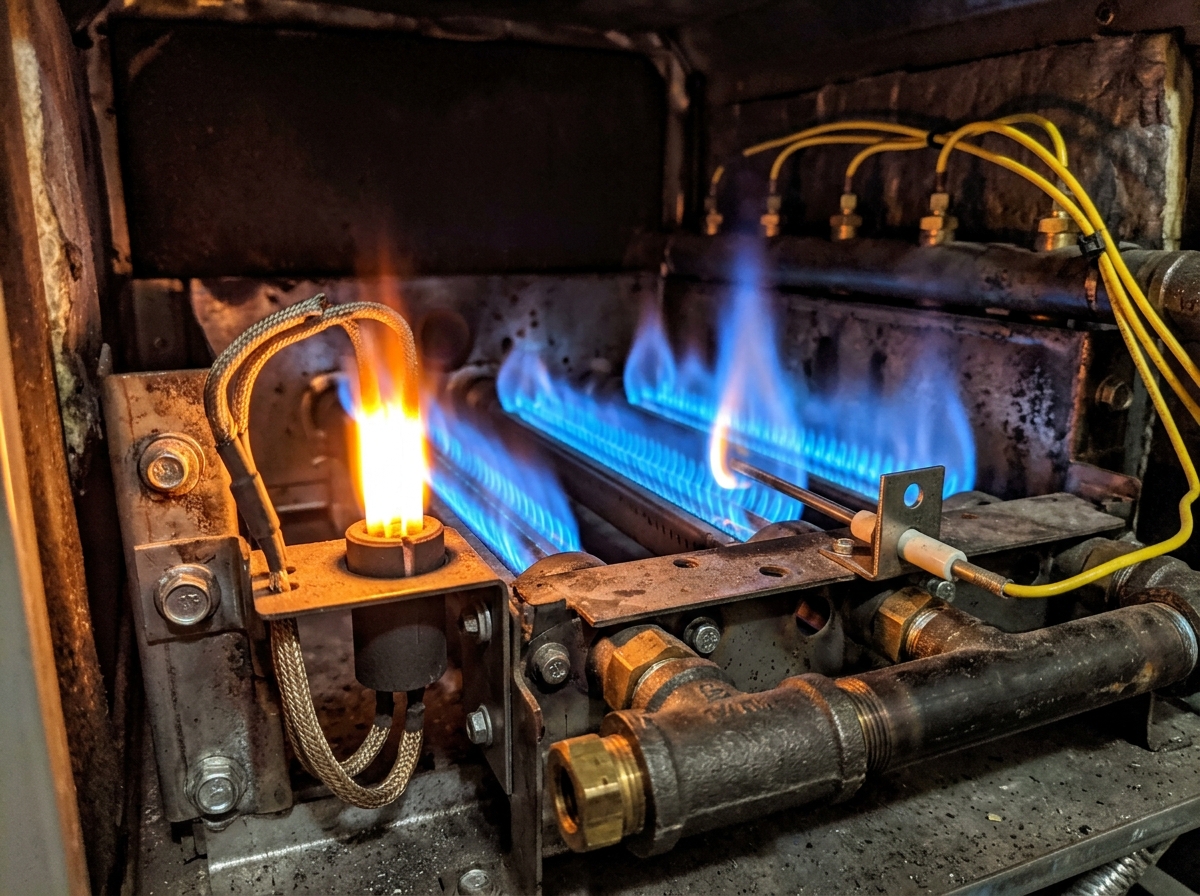
Warning Signs & Common Symptoms
Recognizing early symptoms prevents mid-winter heating shutdowns and prevents further component damage:
- !Furnace cycles on for 30 to 90 seconds then shuts down prematurely (short cycling)
- !Loud squealing, metallic grinding, or booming ignition noises upon startup
- !The blower runs continuously but delivers lukewarm or room-temperature air
- !Diagnostic LED light on the furnace control board flashing error codes
- !Noticeable spikes in winter natural gas or electric utility bills
Professional Service & Diagnostic Procedure
Qualified heating technicians utilize structured diagnostic sequences rather than guessing or replacing parts arbitrarily:
Control Board Diagnostic Readout
Inspect the flash pattern on the integrated furnace control (IFC) board to identify logged fault codes.
Combustion & Safety Verification
Test draft inducer pressure switch differential, flame rectification microamps, and high-limit continuity.
Precision Component Replacement
Install OEM or matched-specification replacement parts including igniters, gas valves, or blower motors.
Operational Static & Carbon Monoxide Testing
Measure supply/return temperature rise and sample flue gases for safe combustion without carbon monoxide leakage.
What You Can Safely Check
- •Verify that the thermostat is firmly set to "HEAT" and the temperature setting is at least 3°F above room temperature
- •Check that the main power switch mounted on or beside the furnace cabinet has not been bumped off
- •Inspect the furnace air filter; heavily clogged filters are the primary trigger for high-limit overheating shutdowns
- •Confirm the electrical service panel circuit breaker for the furnace has not tripped
Requires Qualified Professional
- ⚠Never attempt to bypass a high-temperature limit switch or rollout switch with a jumper wire; these safety switches prevent house fires
- ⚠Do not strike or scrape silicon carbide or nitride igniters with tools, as ceramic elements are extremely brittle and sensitive
- ⚠Turn off main gas shut-off and electrical disconnect before removing furnace access doors
Frequently Asked Questions About Furnace Repair
Furnace Repair Available by State
Our local heating specialists serve all 50 states and metropolitan regions:
Inquire About Furnace Repair
Call our customer service team to describe symptoms, request diagnostics, or schedule service.