Furnace Replacement & Heating Upgrades
Replacing an aging furnace is an important decision regarding home comfort, indoor air quality, and winter heating safety. Most residential furnaces have an expected service life of 15 to 20 years. Beyond this threshold, metal fatigue in heat exchangers increases the risk of hairline cracks, motor windings degrade, and replacement parts become obsolete. Upgrading to a modern variable-capacity furnace delivers whisper-quiet operation and predictable utility expenses.
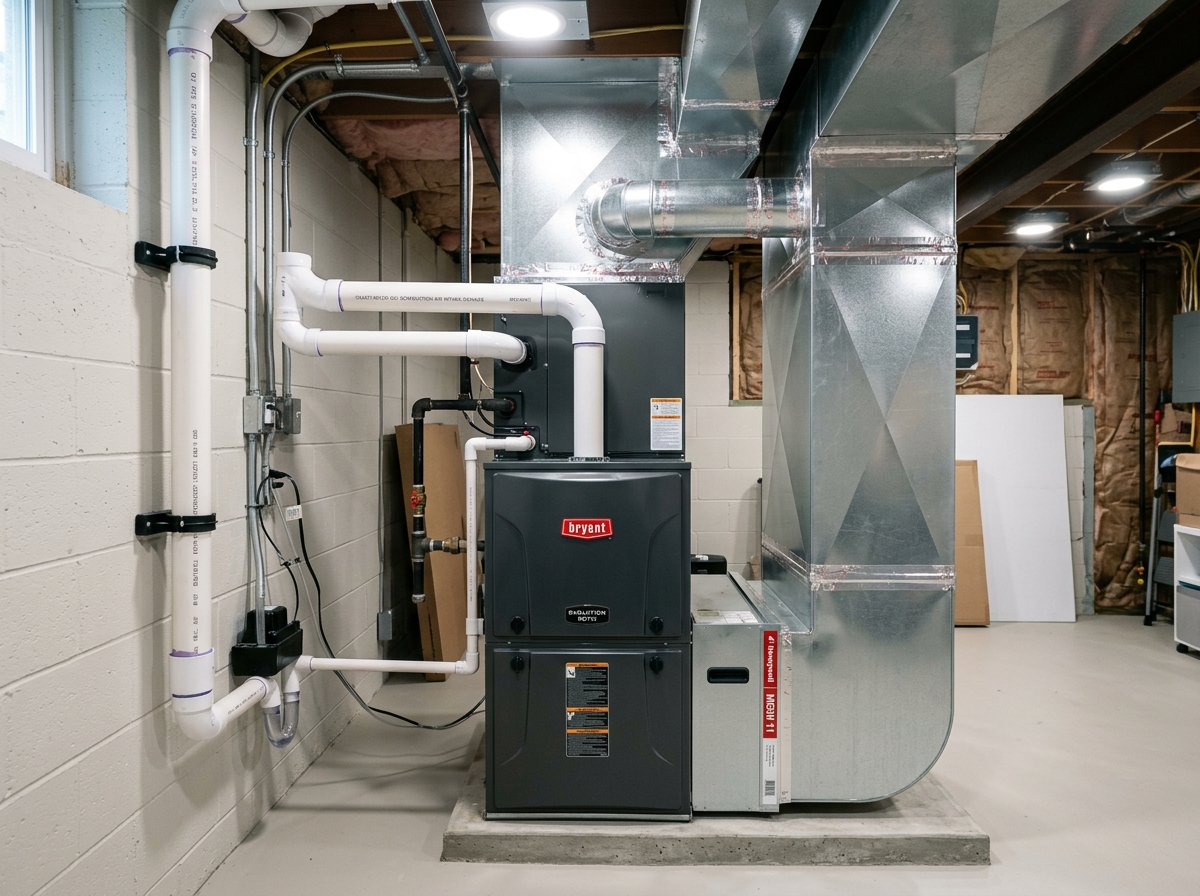
Warning Signs & Common Symptoms
Recognizing early symptoms prevents mid-winter heating shutdowns and prevents further component damage:
- !Furnace requires major repairs totaling more than half the price of a modern replacement
- !Rattling, banging, or humming sounds that indicate advanced mechanical bearing wear
- !Excessive household dust, dry indoor air, and uneven room-by-room temperatures
- !Visible rust streaks or corrosion around the flue pipe collar and burner box
Professional Service & Diagnostic Procedure
Qualified heating technicians utilize structured diagnostic sequences rather than guessing or replacing parts arbitrarily:
System Life Cycle Assessment
Perform visual and electronic heat exchanger inspection to determine if repair is economically justifiable.
Efficiency & Fuel Conversion Evaluation
Review options between standard 80% non-condensing and high-performance 96%+ modulating condensing units.
Decommissioning & Safe Disposal
Safely decommission the old equipment and dispose of hazardous materials according to environmental regulations.
Comprehensive System Commissioning
Calibrate manifold gas pressure, verify temperature rise across heat exchangers, and program the digital thermostat.
What You Can Safely Check
- •Review existing furnace model and serial number plate to identify current BTU capacity and age
- •Note persistent cold zones or airflow imbalances in specific rooms to discuss duct balancing
- •Inquire about available federal energy efficiency tax credits and local utility rebates for high-efficiency models
Requires Qualified Professional
- ⚠Never run a furnace known to have a compromised heat exchanger; flue gases can mix with supply breathing air
- ⚠Ensure proper electrical grounding to prevent sensitive microprocessors on new control boards from frying during power fluctuations
Frequently Asked Questions About Furnace Replacement
Furnace Replacement Available by State
Our local heating specialists serve all 50 states and metropolitan regions:
Inquire About Furnace Replacement
Call our customer service team to describe symptoms, request diagnostics, or schedule service.