Heat Exchanger Safety Inspection & Replacement
The heat exchanger is the most critical and hazardous safety component inside any fuel-burning furnace. It separates poisonous combustion gases (including carbon monoxide, nitrous oxide, and soot) from the breathable indoor air circulating through your home. Over decades of constant heating expansion and cooling contraction, metal fatigue can cause hairline fractures, weld separations, and rust penetrations.
Warning Signs & Common Symptoms
Recognizing early symptoms prevents mid-winter heating shutdowns and prevents further component damage:
- !Carbon monoxide detectors sounding alarms in the home
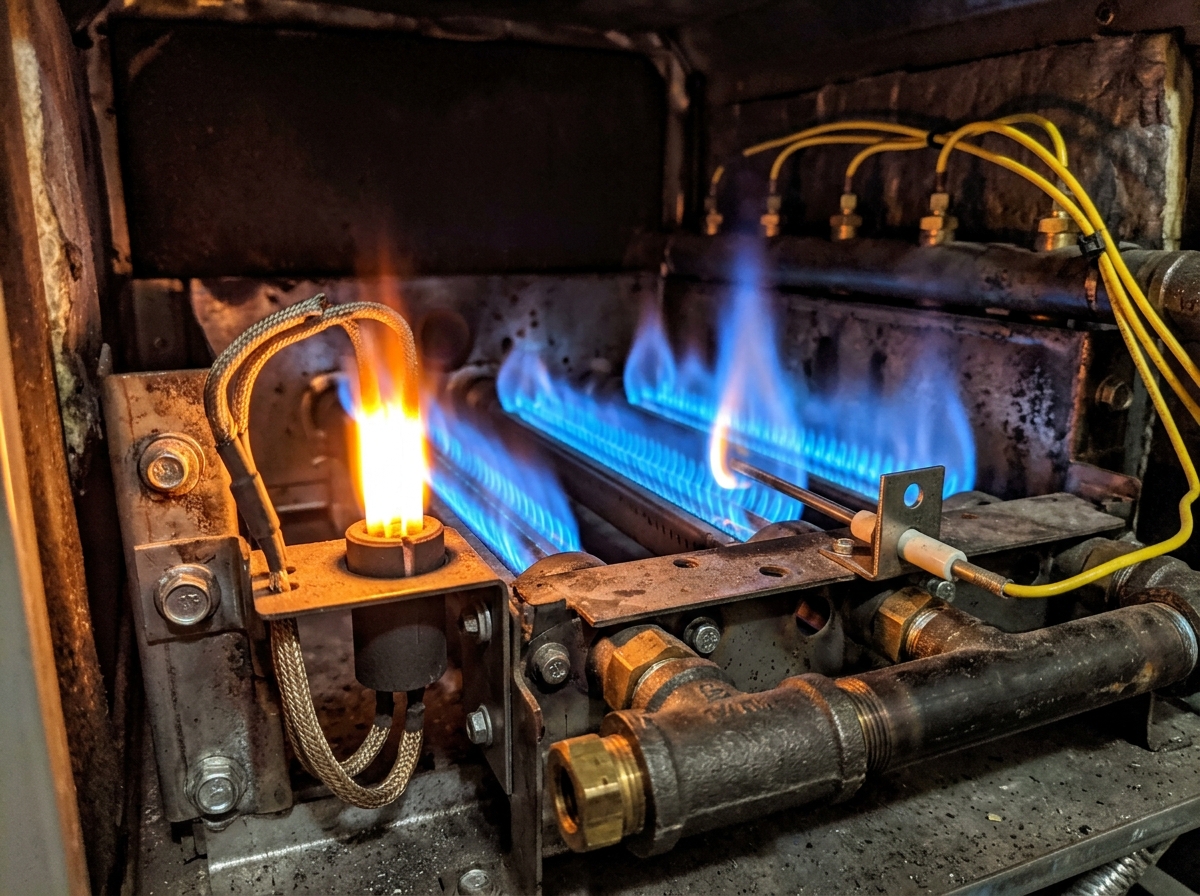
- !Burner flames that visibly dance, flicker, or bend outward when the indoor blower fan starts
- !Physical symptoms such as unexplainable morning headaches, eye irritation, or nausea among occupants
- !Extensive rust flakes falling down into the burner chamber underneath heat exchanger tubes
Professional Service & Diagnostic Procedure
Qualified heating technicians utilize structured diagnostic sequences rather than guessing or replacing parts arbitrarily:
Visual Borescope Inspection
Feed illuminated fiber-optic cameras into heat exchanger clamshells and tubes to inspect bends, dimples, and weld seams for cracks.
Static Airflow Interference Test
Monitor burner flame stability while switching the blower motor on and off to detect air leaking from the supply plenum into combustion chambers.
Electronic Flue Gas Analysis
Sample exhaust gases with an electrochemical flue analyzer to detect incomplete combustion and rising CO parts-per-million.
Safety Isolation Protocol
If a crack is verified, immediately shut off gas to the unit, document photographic evidence, and explain replacement options.
What You Can Safely Check
- •Install UL-listed digital carbon monoxide alarms on every floor and directly outside each sleeping area
- •Never operate a furnace if you or family members experience persistent headaches that disappear when leaving the home
- •Schedule annual heating inspections before every winter season
Requires Qualified Professional
- ⚠Federal and state safety codes strictly prohibit operating a furnace with a known cracked heat exchanger; chemical sealants or welds are illegal and dangerous
- ⚠Carbon monoxide is completely odorless, colorless, and tasteless; you cannot rely on smell to detect heat exchanger failure
Frequently Asked Questions About Heat Exchanger Safety Inspection
Heat Exchanger Safety Inspection Available by State
Our local heating specialists serve all 50 states and metropolitan regions:
Inquire About Heat Exchanger Safety Inspection
Call our customer service team to describe symptoms, request diagnostics, or schedule service.